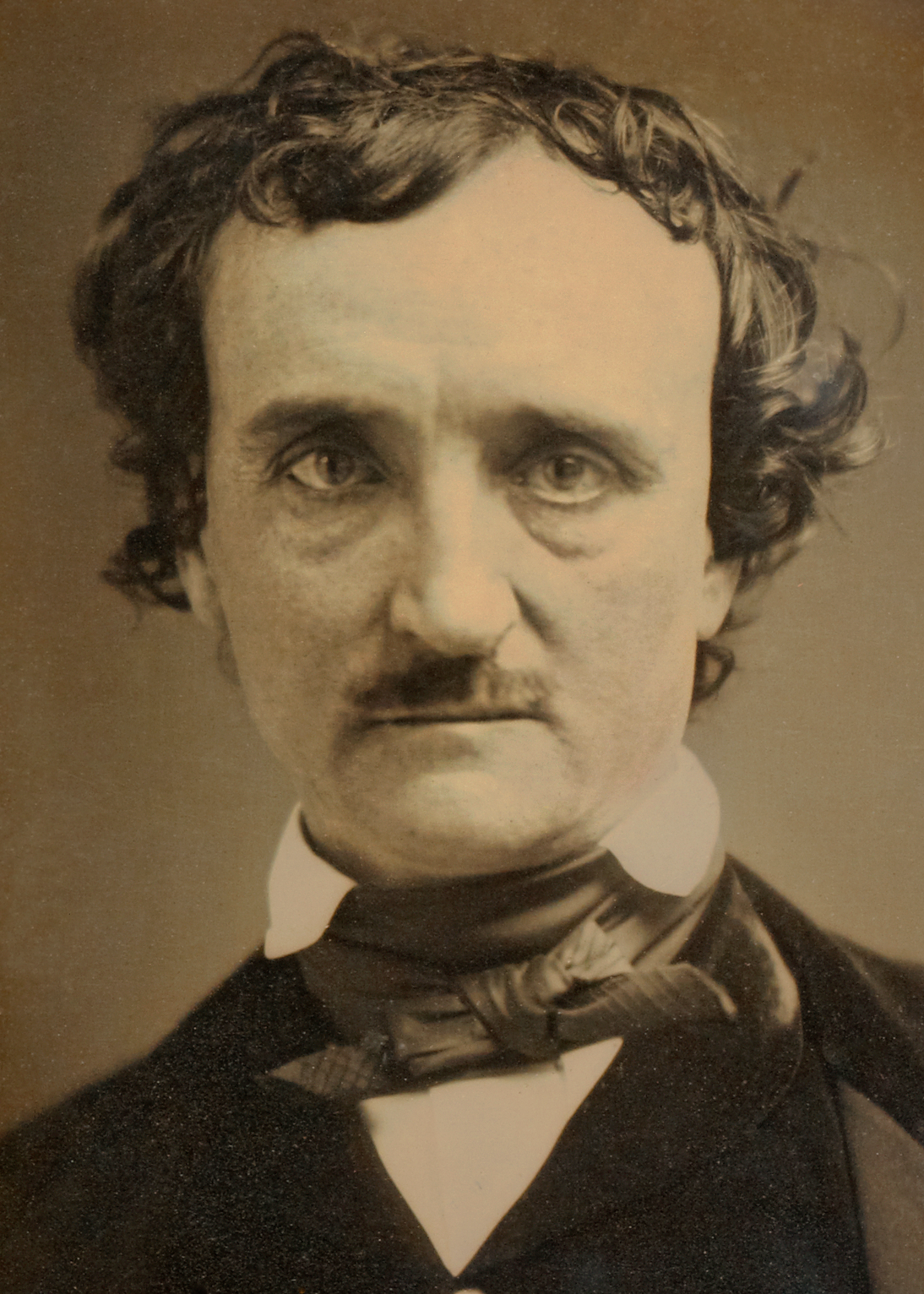
Edgar Allan Poe was born in Boston on January 19, 1809 and lived to be one of the major American writers of his generation. Poe’s parents were both actors and died by the time he was three years old. He went on to be raised by John and Frances Allan, a couple with no children living in Richmond, while his two other siblings were sent to different foster parents. Poe attended good schools in England until Allan’s business prospects dwindled, forcing them to move back to Richmond. This is when tensions started to arise between Poe and his foster father which ended in Allan refusing to pay for Poe’s school and Poe ending up in debt from gambling. Allan later ordered Poe out of his house when Poe was eighteen years old. Poe eventually married his cousin, Virginia, in 1835 when he was 27 and she was 13. Throughout his life Poe had always struggled with substance abuse and alcoholism, especially after his wife died in 1847 from Tuberculosis. Among Poe’s accomplishments, he invented the modern detective story in 1841 with his The Murders in the Rue Morgue. This went on to inspire many other detective writers like Sherlock Holmes to further explore detective stories in their own works. He eventually died in Baltimore in 1849 under mysterious circumstances. His story, “The Tell-Tale heart”, is seen as a classic in the Gothic genre to many people and is actually one of his most famous short stories.

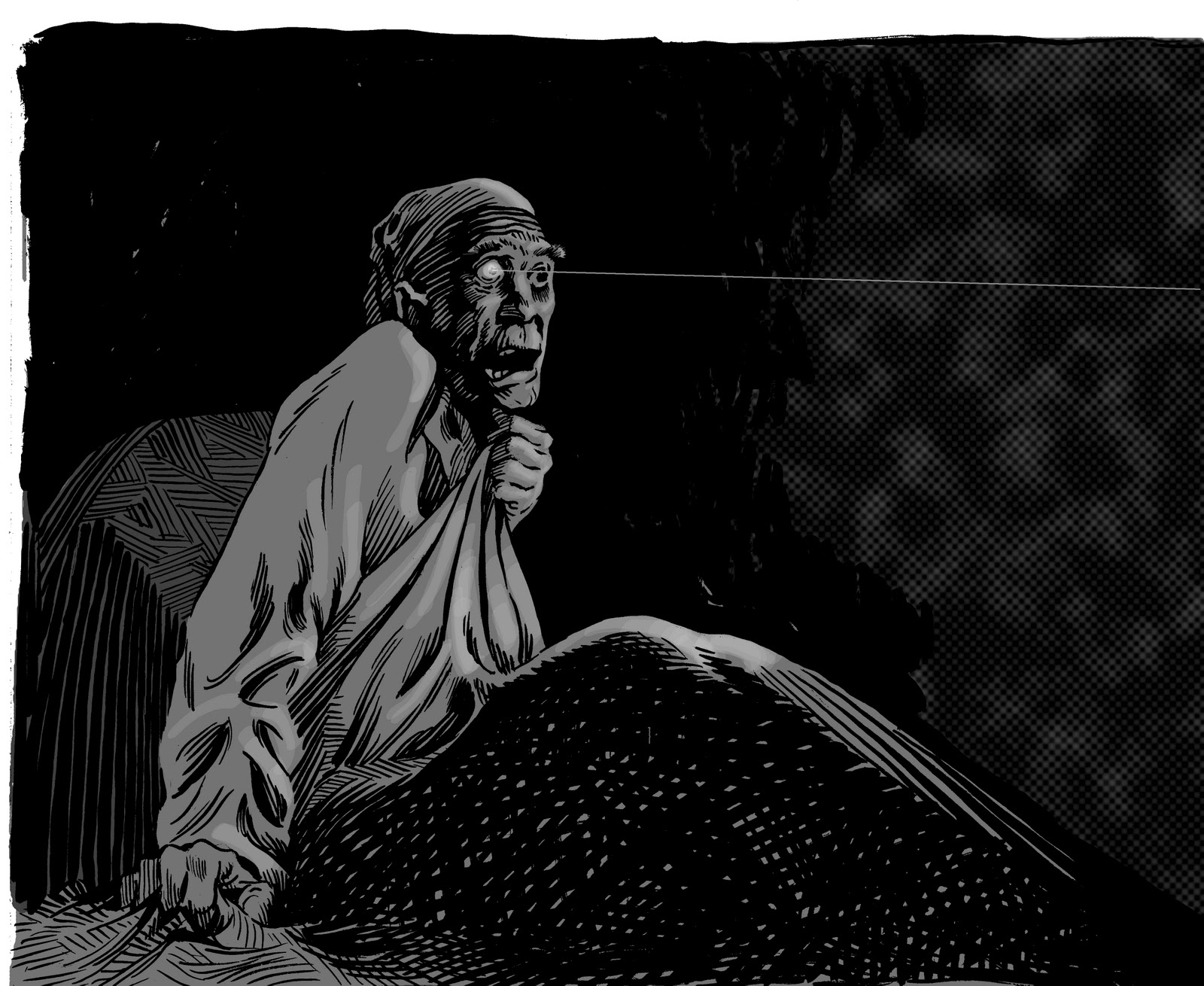
“The Tell-Tale Heart” is told by an unknown narrative figure who suffers from a sort of psychological paranoia. He starts talking about his decision to kill an old man because this man had a pale blue eye which the narrator described as “the eye of a vulture” (691). Throughout the whole story he argues his sanity as he shares his motive to kill. He states that he did not want to kill the old man because of any other reason than his vulture eye. For seven days, he went into the room of the old man at around midnight each night, opened the door cautiously, and struck a “single thin ray” of light from a lantern upon the old man’s vulture eye (692). However every night when he did this the man’s eye was closed shut, preventing the narrator from killing him right then and there. Throughout this process, the narrator makes a point to showcase his cunning and wise actions towards creeping in and out of the man’s room. He shows this very plainly when he says “You should have seen how wisely I proceeded-with what caution- with what foresight- with what dissimulation I went to work” (692). As he visited the old man in his room on the eighth night his thumb slipped as he was opening the lantern, causing the old man to become startled as he “sprang up in the bed, crying out- ‘who's there?’” (692). When the narrator shines the thin ray of light unto the man’s vulture eye he finds it to be wide open. This infuriates him and fuels his desire to murder the man. He starts hearing what he presumes to be the old man’s heart beating faster and louder every second and worries that the neighbors might hear it (693). He then “leaped into the room” and dragged the old man to the floor, killing him (693). He rid of the man’s body by dismembering the corpse and hiding the pieces underneath the floor of the man’s room (694). After he was done three police officers came knocking at the door because of a reported shriek from the house (694). As the narrator was showing the officers the old man’s room he began hearing the sound of the man’s heartbeat once again growing louder and louder and thought the officers might hear it. This caused him to abruptly confess the crime of murdering the old man to the three officers.
Poe’s “The Tell-Tale Heart” is the shortest story that he wrote and he used very short sentences in order to provide a sense of urgency and suspense for his readers. The unknown narrative voice in this story suffers from paranoia and believes that the side affects of his psychological disease are actually what makes him wise and cunning. Throughout the story the narrative voice is talking about the incident as if it had already happened and judging by the ending of the story, he is talking to some sort of authoritative figure. He does not hate the man, he only hates the man’s eye. He makes a point to distinguish between the two in order to put the blame of the murder on the eye and all of its tempt for murder. The narrator perceives the sound of a heartbeat growing louder and faster as the old man’s heart when in fact, it was his own heart. Poe uses this as a way to show that the murderer was feeling nervous and guilty beyond belief. His own conscious guilt was represented by his heartbeat and he tries to get rid of it by assigning the loud heartbeat to the old man instead while he abandons his own humanity. In this story, Poe is playing with the psychological mystery of why people sometimes harm their loved ones.
I also found this great website here https://www.poemuseum.org/ that includes extra information about Poe’s biography, all of his works, and the museum that was erected in his honor in Richmond, Virginia. The museum is home to the largest collection of Poe memorabilia in the world!
Works Cited
Baym, Nina, and Robert S. Levine, eds. "Edgar Allan Poe." The Norton Anthology of American Literature. 8th ed. Vol. B. New York: W. W. Norton, 2012. N. pag. Print.
Poe, Edgar Allan. "The Tell-Tale Heart." The Norton Anthology of American Literature. 8th ed. Vol. B. New York: W. W. Norton, 2012. N. pag. Print.
